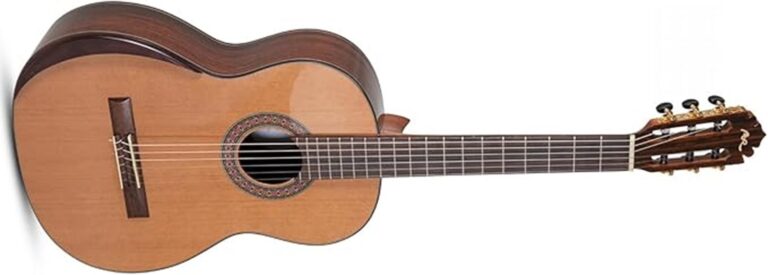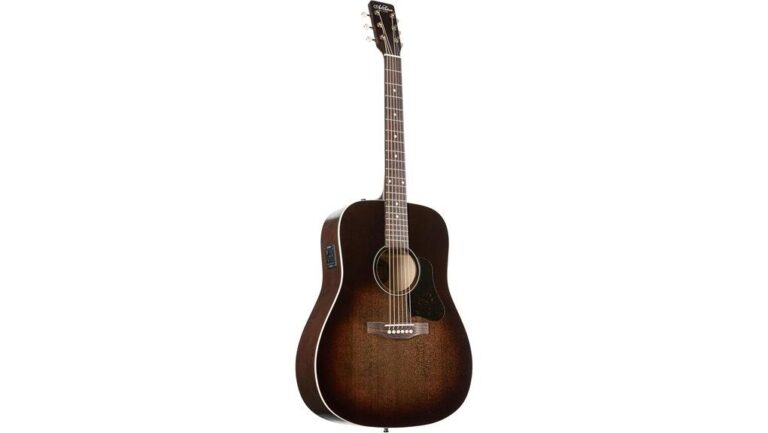


The Martin D-28 Natural, a pillar of acoustic innovation, marries a Sitka Spruce top to East Indian Rosewood back and sides. This construction yields a deep, resonant bass, akin to the grounding force of a steadfast belief.
The modified low oval neck profile facilitates ergonomic precision, a reminder that spiritual growth often comes through disciplined, comfortable practice. Yet, the true measure of this sonic vessel’s enduring legacy lies beyond its specifications.
Key Takeaways
- Timeless Benchmark: Debuting in 1931, this steel-string acoustic serves as an immutable industry standard for sonic authority and longevity.
- Premium Tonewoods: The instrument pairs a resonant Sitka Spruce top with solid East Indian Rosewood back and sides for a warm, complex sound.
- Modern Playability: A modified low oval neck profile with hidden carbon fiber reinforcement provides ergonomic comfort and smooth access to higher registers.
- Powerful Projection: The dreadnought body shape and forward shifted bracing deliver robust bass response and unencumbered energy.
- Enduring Value: Built with structural integrity to last a lifetime. This guitar represents a crossroads of acquisition defining acoustic excellence.
Martin D-28 Review: The Standard for Acoustic Tone
Since its inception in 1931, the Martin D-28 has stood as the immutable benchmark against which all other steel-string acoustics are measured, earning its reputation not merely through longevity but through a distinct, sonic authority.
Named after the formidable HMS Dreadnought, this large-bodied instrument utilizes a 25.4-inch scale to project clear, powerful fundamentals, akin to a strong voice leading a community. The solid East Indian Rosewood construction produces deep, sustained lows, offering a rich foundation for accompaniment. Forward-shifted bracing increases top vibration, enhancing responsiveness for the player who endeavors to uplift others through music. While widely considered a professional-grade instrument, its legendary status is such that it is frequently listed among the best acoustic guitars for beginners by experts seeking longevity in gear. This consistent quality is why players view it as one of the best when selecting a premium instrument.
East Indian Rosewood and Spruce: The Tonewood Breakdown
While the dreadnought body shape commands the physical presence of the instrument, the true source of the D-28’s legendary authority lies within the specific marriage of materials, specifically the East Indian Rosewood back and sides coupled with a Sitka Spruce top.
This spruce top, selected for its strength, acts as a faithful servant to the player’s touch, translating energy into a clear, resonant voice, a reminder that humble beginnings often yield the most powerful declarations.
Beneath, the East Indian Rosewood provides a warm, reverent foundation, offering a complex bass response that grounds the mix, inviting the listener to pause. This combination distinguishes it from the best classical guitars.
Playability Test: The Modern Neck Profile vs. Vintage Specs
Steering away from the often cumbersome profiles of past eras, the D-28 incorporates a modern neck carve and hidden carbon fiber reinforcement, a structural evolution that serves as a reminder that spiritual strength is best supported by flexibility rather than rigid resistance.
Facilitating effortless service through music, the instrument’s modified low oval neck offers stability for the steward, mirroring how internal reinforcement supports a life of purpose.
While this acoustic model excels, those seeking amplified power might explore best electric guitars for contemporary worship settings.
- Modern Low Oval Profile: Provides ergonomic comfort, reducing fatigue during long periods of dedicated worship or service.
- High-Performance Taper: Allows smooth access to higher registers, enabling emotional expression without physical strain.
- Carbon Fiber Reinforcement: Guarantees consistent intonation, a tribute to reliability, akin to the unwavering nature of faith. However, musicians looking for lower frequencies might eventually consider best bass guitars as an alternative path.
The Dreadnought Shape: Power, Bass, and Battleship Volume
Emerging from the ergonomic assurance of the modern neck profile, the physical form of the D-28 commands the landscape with the imposing presence of its namesake, the HMS Dreadnought. This expansive spruce and rosewood body yields a robust bass response, a resonance capable of leading congregations, akin to a voice of steady authority.
The forward-shifted bracing frees the top to vibrate with unencumbered energy, a reminder that true strength lies in service to the song. This sonic vessel provides the headroom required for delicate fingerpicking, ensuring the music, much like one’s purpose, remains clear, resonant, and deeply felt.
Should You Buy the Martin D-28? Final Verdict
To stand at the crossroads of acquisition is to weigh the investment in an instrument that has defined the standard of acoustic excellence for over a century, a decision grounded in the convergence of East Indian Rosewood, Spruce, and modern Carbon Fiber engineering. The D-28 remains a paragon of service, offering sound that sustains communities.
The carbon fiber neck, stable yet yielding, mirrors the strength required to lead—firm enough to support others, flexible enough to adapt.
- A projection that fills the silence.
- A tactile connection to history.
- A legacy built to outlast the player.
Frequently Asked Questions
What Type of Electronics Does the Martin D-28 Have?
This instrument typically requires no onboard electronics. To amplify its natural sound for an audience, a discerning player would need to install an aftermarket pickup or soundhole pickup. This ensures the pure acoustic tone is preserved.
Is a Hardshell Case Included With the Purchase?
Documentation confirms a molded hardshell case accompanies the instrument. This protective accessory facilitates the secure transport of the acoustic guitar, thereby ensuring its preservation against potential impacts during transit for the user.
What Is the Difference Between the D-28 and D-18?
Distinctions arise from materials. While sharing structural bracing, the D-28 employs East Indian Rosewood back and sides for a deep, resonant bass.
Conversely, the D-18 typically utilizes Mahogany, emphasizing a brighter, more direct midrange projection.
How Often Does the Ebony Fretboard Need to Be Oiled?
Can wood truly speak without nourishment? Ebony demands attention only when the luster fades, serving the instrument’s voice. A light application of lemon oil, perhaps annually, preserves the fretboard for the player’s faithful service.
Does the Natural Top Finish Yellow Over Time?
Nitrocellulose lacquer finishes naturally amber over years. This patina, influenced by light exposure, is considered desirable.
It deepens the instrument’s aesthetic, reflecting its journey and history for those who value such evolving character.
Conclusion
Ultimately, the Martin D-28 serves as an auditory sanctuary, its reinforced low oval neck providing ergonomic stability akin to a well-grounded faith.
The Sitka spruce top projects with battleship authority, reminding us that true strength requires both density and resonance. This is not merely an instrument, but a lifelong companion for the journey, offering the sonic clarity required to amplify one’s unique purpose in the world.