
The Thompson Belly Reducer Kit addresses soundboard deformation with precision-machined aluminum, its magnetic alignment system offering stability much like unwavering faith anchors a weary soul.
This non-invasive method corrects warping without harming internal bracing, a tribute to patience, and care. Yet, the true measure of its worth extends beyond simple repair.
Key Takeaways
- The kit features precision-machined aluminum components designed to correct soundboard bulging and stabilize bridge plates without modifying internal bracing. An embedded magnetic alignment system ensures perfect, hands-free centering and stable clamping without the need for manual adjustment.
- The restoration process requires removing the bridge and warming the aluminum castings to precisely 150 degrees Fahrenheit.
- A twenty-four hour clamping period is necessary to allow the wood fibers to realign before re-bridging the instrument. This non-invasive solution preserves vintage integrity by preventing irreversible damage while honoring the original luthier’s work.
Does Your Guitar Need the Thompson Belly Reducer?
How often does the silent war between string tension and structural integrity compromise the voice of a beloved instrument? Excessive pressure often deforms the soundboard, creating a bulge behind the bridge, which compromises playability and threatens the bridge plate’s longevity. The market offers some of the best acoustic guitars to avoid these issues, but older instruments require expert care.
A luthier serving the community must act, not with invasive surgery that diminishes an instrument’s soul, but with careful restoration. Addressing this warping is akin to shepherding a spirit back to peace, ensuring the instrument may sing fully again without the burden of structural stress, preserving its voice for future generations to cherish. However, beginners should understand that structural integrity issues are rare on modern builds.
Thompson Belly Reducer Kit: What’s Included?
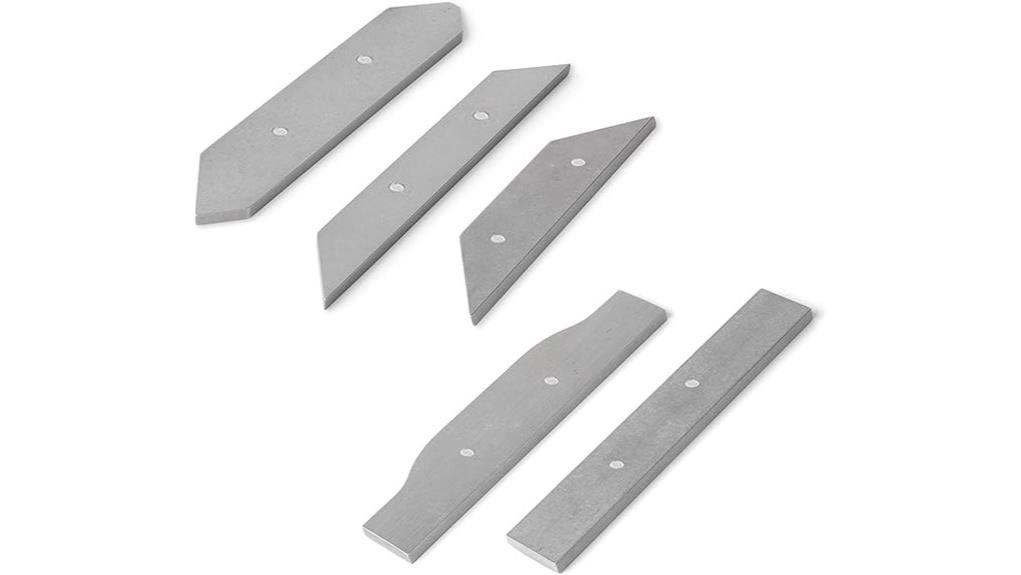
Arriving in a compact ensemble of five precision-machined aluminum components, the Thompson Belly Reducer Tool serves as the luthier’s disciplined ally in the restoration of order, offering the hardware necessary to reverse the deformation of a soundboard.
This sacred collection includes two convex flatteners, crafted to gently correct the belly’s swelling, and three concave counterparts designed to stabilize bridge plates, akin to how patience stabilizes the spirit during restoration. The kit’s distinct layout allows the user to address structural geometry effectively without modifying the bracing. Heated and applied with care, these robust instruments facilitate a non-invasive healing process, preserving the instrument’s vintage integrity, a tribute to the honor found in serving others through meticulous, reverent craft. Proper application of this tool is critical, as excessive pressure can damage the best classical guitars.
How the Magnetic System Aligns Your Bridge
Embedded within the core of these precision-machined aluminum components lies a sophisticated magnetic array, allowing the convex and concave flatteners to seek perfect alignment without the need for manual adjustment. This silent attraction, akin to unseen grace, guarantees the luthier’s work remains true. However, unlike the considerations for best bass guitars, this tool prioritizes acoustic preservation over electronic amplification.
For those dedicated to restoration, this system offers:
- Intuitive Centering: Magnets guide the top and bottom plates into perfect union, a reminder that even in misalignment, there is a pull toward wholeness.
- Stable Clamping: Eliminates shifting, securing the bridge firmly against the soundboard.
- Faithful Service: Hands-free operation allows the artisan to focus entirely on the instrument’s care.
Step-by-Step Guide to Flattening Your Soundboard
While the bridge is removed and the wood is bared to the air, the process of restoring the instrument’s form requires patience, and a steady hand, for the Thompson Belly Reducer Tool operates on the principle that true correction demands both heat and humility.
To serve the instrument well, one warms the aluminum castings to precisely 150 degrees F, a gentle warmth akin to compassion, dampens the bridge area, and clamps the matched magnets. This twenty-four hour vigil, a quiet discipline, allows the wood to realign, faithfully preparing the canvas for the bridge’s return, ensuring the luthier’s work endures.
Is the Thompson Tool Worth the Investment?
Is the Thompson Tool Worth the Investment?
When the craftsman weighs the value of the Thompson Belly Reducer Tool, the decision ultimately transcends mere cost, resting instead upon the preservation of history and the integrity of the acoustic guitar.
Consider how this investment serves the greater good:
- The aluminum alloy construction, light yet strong, mirrors the burden we carry, while the embedded magnets, holding firm without constant pressure, remind us to support others silently.
- Restoring a bulging soundboard, akin to healing a spirit, honors the luthier’s original call.
- This tool prevents irreversible bridge plate damage, ensuring the song continues for generations.
Frequently Asked Questions
Can the Tools Be Used on Bridges With Pickup Systems?
The manufacturer’s specifications do not explicitly detail compatibility with pickup systems. Given the protocol requires direct tool contact and heat application, one must proceed with extreme caution to avoid damaging any delicate electronic components or sensors.
Is 150 Degrees Fahrenheit Safe for Vintage Guitar Finishes?
Applying 150 degrees Fahrenheit is generally considered safe for vintage finishes when carefully monitored, provided the heat source remains directed at the metal tool.
This controlled warmth aids glue set without damaging the instrument’s finish.
Are the Aluminum Tools Safe to Use on Softwood Braces?
Precision-machined aluminum surfaces provide a safe method for reforming softwood braces. This non-destructive approach allows luthiers to carefully preserve a vintage instrument’s structural integrity while correcting soundboard deformation.
Ensuring the continued voice of the guitar.
Where Can I Purchase the Recommended Ibex Bridge Clamps?
The luthier obtains the clamps from specialty suppliers, ensuring precise alignment for each repair.
Consider a dedicated technician: by sourcing the correct Ibex gear, they serve the client’s instrument, preserving its unique voice for a lifetime of music.
Does This Process Work on Classical Guitars With Nylon Strings?
The protocol is designed for steel-string instruments, not classical guitars. The differing bracing, string tension, and construction of nylon-string guitars render the specific forces applied by these tools potentially ineffective or unsafe for those instruments.
Conclusion
Ultimately, the Thompson Belly Reducer operates like a silent meditation, requiring patience to restore the instrument’s true voice. The precision-machined aluminum system, utilizing a unique magnetic alignment, stabilizes the soundboard, a reminder that grace often utilizes invisible forces to mend structural flaws.
This tool offers a path to sonic redemption, ensuring that vintage integrity is preserved, allowing the music to resonate clearly once again.